
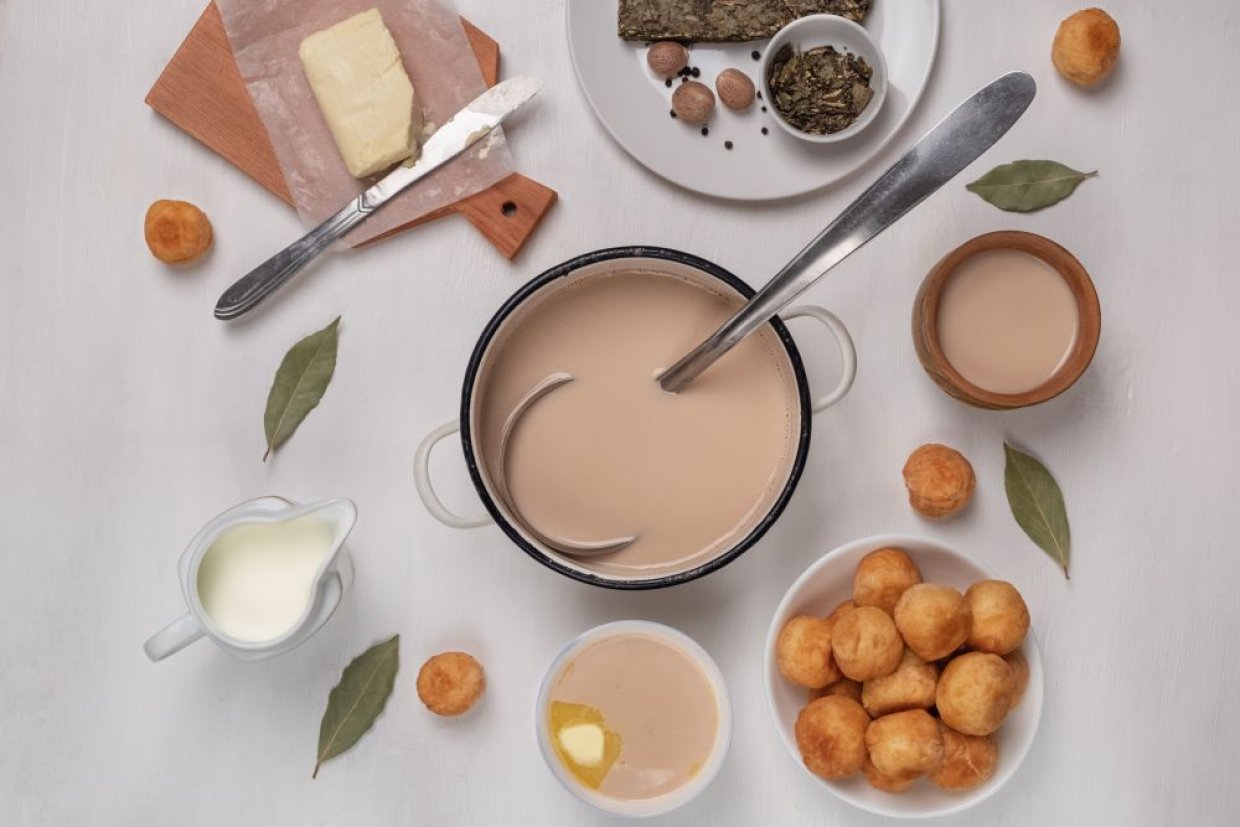
Kalmyk tea (called jomba in the Kalmyk language) is not just a drink, but one of the most important elements of the culture, daily life, and worldview of the Kalmyk people. It is consumed every day and is always offered to guests as a sign of respect and good wishes.
What is Kalmyk tea
Kalmyk tea is a strong tea prepared with milk, salt, and butter, sometimes with the addition of nutmeg, bay leaf, or black pepper. For those unfamiliar with it, the taste may seem unusual, but for Kalmyks it symbolizes warmth, comfort, and vital energy.
Historical roots
The tradition comes from the nomadic life of the steppe. The tea was meant to:
- provide nourishment,
- warm the body in cold weather,
- restore strength after long journeys.
That is why jomba is considered both a drink and a meal.
Main ingredients
- Tea — usually pressed green or black tea
- Milk — cow’s, sheep’s, or mare’s milk
- Salt
Butter (butter or clarified butter)
Sometimes added:
- nutmeg
- bay leaf
- black pepper
How it is prepared
Kalmyk tea is not steeped but boiled:
- The tea is boiled in water for a long time.
- Milk and salt are added.
- Butter is added at the end.
The drink is thoroughly mixed, sometimes “lifted” with a ladle — this is considered an important ritual.
Cultural significance
Hospitality: no visit begins without tea.
Blessing: the first bowl is often offered to elders.
Sacred meaning: tea is used in rituals and holidays (Tsagan Sar, Zul).
Family unity: tea is drunk slowly, accompanied by conversation.
Refusing the offered tea is considered impolite.
Benefits
From a traditional perspective, Kalmyk tea:
- strengthens the body,
- warms the body,
- helps with fatigue,
- aids recovery after illness.
Modern studies also note its high caloric value and nutritional content, which was especially important in steppe conditions.
Interesting fact
For a Kalmyk person, tea without salt is not tea. Sweet tea is perceived more as a dessert than as a true drink.
